
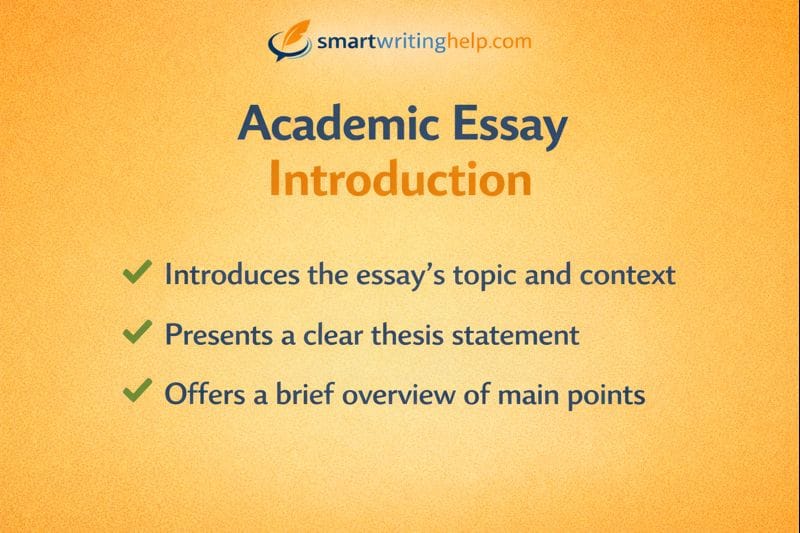
An academic essay introduction is the starting paragraph of your essay. It explains what your essay is about and why it matters. Its purpose is to inform and guide the reader, not to entertain. Its purpose is to grab the reader’s attention, provide essential context, and clearly present your thesis statement.
A strong introduction paragraph ensures readers understand the essay purpose, the topic introduction, and what to expect from the essay’s structure.
This section explains why an essay introduction matters, what it includes, and how it prepares your essay for success.
Why the Introduction Matters
A strong introduction helps the reader:
- Understand the topic and its context
- Know the essay’s purpose and focus
- Follow the essay’s logical flow
Key Role in Academic Writing
The introduction sets the stage for the thesis statement, which is your main argument or claim. It shows that you understand:
- The research question
- The essay topic
- Academic writing expectations
How It Guides the Reader
By giving context and direction, the introduction helps readers see how your evidence and arguments will support your thesis throughout the essay.
How to Write an Academic Essay Introduction
Step 1: Craft a Hook Sentence
The hook is the first line of your introduction, designed to grab the reader’s attention and make them curious about your essay. It can be a surprising fact, a thought-provoking question, a brief anecdote, or a bold statement. A strong hook connects naturally to your topic and sets the tone for the rest of the essay.
Examples of hooks:
- A surprising fact: “Over 60% of college students rely on digital tools for research daily.”
- A thought-provoking question: “How does urban gardening improve mental health in cities?”
- A short anecdote: “When a community turned an empty lot into a garden, local residents reported stronger social ties.”
Step 2: Provide Background Information
After the hook, give readers just enough context to understand your topic. Explain key terms, relevant history, or important debates without going into too much detail. Background information bridges the hook and thesis, helping readers see why your essay matters and preparing them for the argument that follows.Avoid too much detail. Focus on:
- Key terms
- Historical or social context
- Important debates or issues
Example:
“Digital learning tools have transformed modern education, offering instant access to information. Yet, their effect on students’ critical thinking skills is still debated.”
Step 3: Present a Clear Thesis Statement
The thesis statement is the main claim of your essay. It tells the reader what you will argue or explain. You can draft a working thesis early to guide your research and structure, then refine it after writing the body to ensure it matches your arguments. Writing it first gives direction, while writing it last ensures accuracy. The best approach is a hybrid: start with a tentative thesis and revise it as your essay takes shape.
Tips for a strong thesis:
- Be specific and arguable
- Align with the essay’s purpose
- Guide the essay structure
Example:
“This essay argues that while digital tools improve access to knowledge, universities must guide students to develop strong critical thinking skills.”
Step 4: Map Your Essay Structure (Optional Conclusion Preview)
Give a brief idea of how your essay will unfold. This helps readers follow your argument. Outline the main points or sections in the order they will appear, so readers know what to expect. This preview improves clarity and logical flow without revealing all the details, helping the audience follow your argument more easily.
Example:
The essay first examines the benefits of digital learning tools, then discusses challenges, and finally suggests strategies for maintaining critical thinking skills.
Step-by-Step Guide to Writing an Introduction
Step 1: Analyze the Essay Question or Topic
Before writing, read the essay prompt carefully. Understanding the topic ensures your introduction is focused, relevant, and aligned with the assignment. This step also helps you identify the type of essay required and what the reader expects.
Tips:
- Highlight key words in the question.
- Identify if the essay is argumentative, analytical, or informative.
- Consider the target audience and academic tone.
Example:
If the essay topic is about urban green spaces and mental health, determine whether to argue their benefits (argumentative) or explain their effects (informative).
Step 2: Define Your Essay Purpose
Clarifying the essay’s purpose helps guide your thesis and structure. Knowing your goal ensures your introduction is clear and aligns with academic expectations.
Tips:
- Decide whether your essay aims to persuade, inform, or analyze.
- Make your purpose specific to the topic.
- Ensure the purpose is reflected in your thesis statement.
Example:
“To argue that integrating green spaces in cities improves residents’ mental health and social cohesion.”
Step 3: Write a Strong Hook Sentence
The hook is your first sentence, designed to grab attention and make the reader interested. It should be concise, relevant, and academically appropriate.
Tips:
- Avoid clichés or overly broad statements.
- Use a statistic, question, anecdote, or bold fact.
- Make sure it connects naturally to your topic.
Example:
“Residents in neighborhoods with more parks report 20% higher mental well-being than those in areas with fewer green spaces.”
Step 4: Add Background Information
Provide context to help readers understand the topic and your thesis. Keep it brief—enough to set the stage but not so much that it overwhelms.
Tips:
- Include historical, social, or scientific context.
- Define key terms clearly if needed.
- Avoid overloading with evidence, which belongs in the body.
Example:
“Urbanization has reduced access to natural spaces, raising concerns about stress and mental health in city residents.”
Step 5: Present a Clear Thesis Statement
The thesis is the central claim of your essay. It shows your position and guides the reader through the arguments you will develop.
Tips:
- Be specific, arguable, and concise.
- Ensure it reflects the essay type and purpose.
- Align with the evidence or examples in the essay.
Example:
“Integrating urban green spaces is essential for promoting mental health, encouraging community interaction, and supporting sustainable city development.”
Step 6: Preview the Essay Structure (Optional)
Briefly outline the structure or main points of the essay. This roadmap improves logical flow and helps the reader follow your argument.
Tips:
- Keep it short—one or two sentences.
- Highlight only the main sections of your essay.
- Avoid repeating the thesis.
Example:
“This essay will first discuss mental health benefits of urban greenery, then examine social advantages, and finally explore implementation strategies.”
Writing Introductions for Different Essay Types
1. Argumentative Essay Introduction
An argumentative essay introduction presents a clear position on a topic. Its goal is to convince the reader that your claim is valid and worth considering. To write an effective introduction, state your stance early, use a hook that highlights the debate or controversy, provide brief background information, and preview the main arguments.
Example:
“School uniforms have sparked debate for decades. While some argue they suppress individuality, this essay shows that uniforms promote equality, reduce distractions, and strengthen school communities.”
2. Informative (Expository) Essay Introduction
An informative essay introduction explains a topic without taking a stance. It guides the reader to understand the subject and sets expectations for the essay content. When writing this type of introduction, focus on clear facts, provide concise background information, preview what the essay will explain or analyze, and avoid expressing personal opinion.
Example:
“Recycling programs are a key part of urban environmental efforts. This essay explores how these programs operate, their benefits, and the challenges cities face in implementing them effectively.”
3. Analytical Essay Introduction
An analytical essay introduction emphasizes interpretation and evaluation of evidence. The introduction explains what will be analyzed and why it matters. To craft a strong introduction, highlight the issue or aspect you will analyze, provide context for your analysis, and end with a thesis that clearly shows your analytical focus. Keep the introduction concise and focused.
Example:
“The design of public parks reflects societal priorities, balancing sustainability, aesthetics, and community needs. This essay analyzes three city parks to examine how planning decisions impact social and environmental outcomes.”
Key Takeaways for All Essay Types
Every essay introduction should include a hook, background context, and a thesis statement. The hook and tone should match the essay type, background information should be relevant and concise, and the thesis must clearly signal the essay’s purpose.
| Essay Type | Purpose | Hook / Opening | Background | Thesis Statement | Example |
| Argumentative | Present a clear stance and persuade the reader | Striking fact, question, or controversial statement | Brief context on debate or controversy | States central claim and main argument | “School uniforms promote equality, reduce distractions, and strengthen communities.” |
| Informative / Expository | Explain a topic clearly without taking a stance | Brief context or background | Historical, social, or factual context | Explains main points the essay will cover | “Recycling programs improve urban sustainability and reduce waste challenges.” |
| Analytical | Interpret and evaluate evidence | General perception or observation | Introduces the issue to be analyzed | Presents interpretive claim | “City park designs balance sustainability, aesthetics, and community priorities.” |
| Narrative | Immerse the reader in a story or experience | Short anecdote or personal story | Sets scene and context | May have implied thesis | “A community garden transformed an abandoned lot, improving social ties and well-being.” |
| Descriptive | Create vivid imagery and sensory engagement | Evocative sensory detail | Describe setting or context | May have implied thesis | “Walking through the park, the scent of blooming flowers highlighted the city’s hidden beauty.” |
Common Mistakes to Avoid in Essay Introductions
1. Starting Too Broadly
Many writers begin with sweeping generalizations like “Since the beginning of time…” or “Everyone knows that…”, which dilutes focus and fails to grab attention. To avoid this, start close to your topic and provide background that directly supports your thesis. Keeping the opening specific helps readers understand why your essay is relevant.
2. Weak or Missing Thesis Statement
A vague or missing thesis leaves your essay without direction. Ensure your thesis is clear, arguable, and aligned with your essay’s purpose. A strong thesis guides the reader through your argument and shows exactly what the essay will demonstrate or explain.
3. Overloading with Background Information
Including too much historical or contextual detail in the introduction can overwhelm the reader. Provide only essential information to understand your topic and thesis. Leave detailed evidence and examples for the body paragraphs, keeping your introduction concise and focused.
4. Using Inappropriate Tone or Style
Slang, casual language, or overly emotional statements weaken your academic tone. Maintain clarity, professionalism, and formal writing conventions throughout your introduction. This ensures your essay meets university standards and builds credibility with your audience.
5. Ignoring the Essay Structure
Failing to provide a roadmap or conclusion preview can make the essay hard to follow. A brief outline of your main points in the introduction guides the reader through your argument and ensures logical flow. This prepares the reader for the essay’s structure without giving away excessive detail.
Key Takeaways
Avoid broad or generic openings, always include a strong thesis, provide concise background information, maintain formal academic tone, and signal your essay structure clearly. Following these practices strengthens reader engagement and establishes clarity from the start.
Checklist for a Perfect Essay Introduction
Writing a strong essay introduction is easier when you follow a clear, step-by-step process. Each step ensures your introduction is engaging, clear, and aligned with academic standards.
1. Start with a Compelling Hook
Your first sentence should grab the reader’s attention and make them curious about your essay. Use a thought-provoking question, a relevant statistic, or a brief example to draw interest. Keep it concise and directly related to your topic.
2. Provide Essential Background Information
After the hook, provide context that helps the reader understand the topic. Explain key terms or outline the problem without overwhelming details. This background bridges the hook and your thesis, preparing the reader for your argument.
3. Present a Clear Thesis Statement
The thesis is the main claim or argument of your essay. It should be specific, arguable, and aligned with your essay type. A strong thesis provides direction and signals what your essay will demonstrate or explain.
4. Maintain Logical Flow and Academic Tone
Ensure every sentence in your introduction flows naturally toward the next. Use formal, clear language that meets academic standards. Avoid casual expressions, overly broad statements, or unnecessary jargon.
5. Include a Brief Roadmap or Conclusion Preview
End your introduction with a concise preview of your essay structure. Highlight the main points you will cover to guide the reader through your argument. This roadmap improves comprehension and sets expectations for the essay.
Writing Introductions for Different Essay Types
Different essays require slightly different approaches for the introduction, though the core elements—hook, background information, and thesis statement—remain the same. Tailoring your introduction ensures it fits the essay type and engages your reader effectively.
i- Argumentative Essay Introduction
An argumentative essay introduction presents a clear stance on a topic. The thesis statement makes a claim that can be supported or challenged. Background information briefly explains the issue and highlights its importance, while the hook draws the reader in with a relevant question or statistic.
Example:
“Despite increasing urbanization, cities should integrate green spaces because they improve mental health, foster social cohesion, and promote environmental sustainability.”
ii- Informative Essay Introduction
An informative essay introduction focuses on explaining a topic rather than taking a stance. The thesis outlines what the essay will cover. The hook introduces the topic, and background information provides essential context for understanding the subject.
Example:
“Urban green spaces, such as parks and community gardens, provide recreational areas, reduce pollution, and enhance residents’ mental well-being. This essay explores these benefits and how cities implement green spaces effectively.”
iii- Analytical Essay Introduction
An analytical essay introduction emphasizes interpretation and evaluation of evidence. The thesis indicates what will be analyzed and why it matters. Background information sets the context, and the hook can focus on a specific analytical angle.
Example:
“The design of urban green spaces reflects broader societal priorities, balancing environmental sustainability, aesthetic appeal, and public health. This essay analyzes three case studies of city parks to understand how planning decisions influence community well-being.”
Checklist for a Perfect Essay Introduction
Step 1: Start with a Hook
Begin your introduction with a compelling opening line that grabs the reader’s attention. This could be a surprising fact, a thought-provoking question, or a short example relevant to your topic. The goal is to make the reader curious and ready to continue reading.
Step 2: Provide Background Information
Give the reader just enough context to understand your topic and why it matters. Avoid overloading details; focus only on the key points that support your thesis and help the reader follow your argument.
Step 3: Present a Clear Thesis Statement
State your main argument or claim clearly and concisely. Your thesis guides the direction of your essay, showing the reader what to expect and establishing your position from the start.
Step 4: Preview the Essay Structure (Optional)
For longer essays, briefly outline the main points you will discuss in the body. This roadmap helps readers see the logical flow of your argument and prepares them for the essay’s structure.
Step 5: Maintain Academic Tone and Flow
Ensure that your introduction is formal, clear, and logically structured. Smooth transitions between the hook, background information, and thesis help the reader follow your ideas effortlessly.
Conclusion – Wrapping Up Your Essay Introduction
The conclusion of your introduction should briefly reinforce the purpose of your essay and remind the reader why it is important. It does not need to repeat everything but should emphasize your thesis and the context you provided. A strong conclusion at the end of the introduction sets a confident tone for the essay and signals that the reader is ready to follow your argument.
Make sure your introduction flows naturally into the first body paragraph. Check that the hook, background information, and thesis are all connected and that the reader clearly understands what the essay will discuss. This final step ensures your introduction is complete, professional, and academically strong.
FAQS
How long should an essay introduction be?
It usually makes up about 10% of the total essay length, but clarity matters more than word count.
Can I write the introduction last?
Yes, you can write the introduction last. Sometimes it’s easier to craft a strong opening after you’ve written the body, so your introduction accurately reflects your arguments.
Should I always include a thesis statement?
Yes, you should almost always include a thesis statement. A clear thesis helps guide the reader and shows the main idea or argument your essay will develop.
What’s the biggest mistake in essay introductions?
The biggest mistake in essay introductions is having an unclear thesis statement, which leaves the reader unsure of the essay’s main point. Another common error is starting with irrelevant information that fails to engage the reader.